
AI Tool Aims to Catch Critically Ill Children
A child can be in the hospital and seemingly getting better. Then, suddenly, everything changes.
One moment they're playing games or watching television. The next, they experience breathing failure, shock, or neurological decline. If the warning signs aren't recognized early enough, the child may require emergency transfer to the intensive care unit (ICU), where interventions can include breathing tubes, blood pressure medications, and other lifesaving measures.
The phenomenon is called “emergent deterioration.”
"Kids will look fine, and then all of a sudden they'll fall off a cliff and rapidly deteriorate," said Dr. Mark Mai, a pediatric intensivist at Children’s Healthcare of Atlanta, who cares for critically ill children in the ICU. "When those kids go to the ICU and need emergency interventions, they have a much higher rate of death than kids we bring up to the ICU in a controlled fashion."
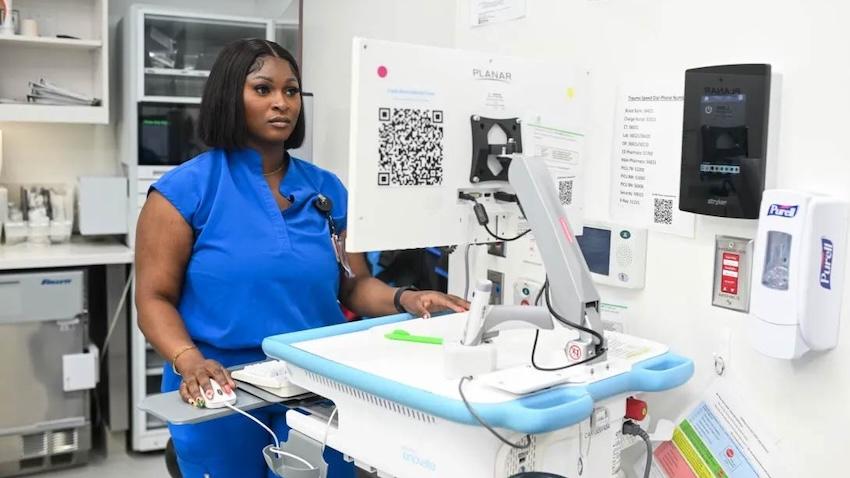
To help clinicians identify those high-risk patients sooner, researchers at Georgia Tech are partnering with Children's clinicians and technology teams to create an artificial intelligence-powered warning system. Known as Algorithm for Counteracting the Clinical Onset of Rapid Deterioration (ACCORD), the three-year project is one of the first funded projects focused on a software solution by the Children’s Healthcare of Atlanta Pediatric Technology Center at Georgia Tech (PTC). Project teams are working simultaneously on model development, app design, and user testing. And, unlike many healthcare AI projects that remain confined to research papers, ACCORD is being designed from the beginning for use in a real hospital. The ultimate goal is to help clinicians intervene before a child reaches a life-threatening emergency.
One moment they're playing games or watching television. The next, they experience breathing failure, shock, or neurological decline. If the warning signs aren't recognized early enough, the child may require emergency transfer to the intensive care unit (ICU), where interventions can include breathing tubes, blood pressure medications, and other lifesaving measures.
The phenomenon is called “emergent deterioration.”
"Kids will look fine, and then all of a sudden they'll fall off a cliff and rapidly deteriorate," said Dr. Mark Mai, a pediatric intensivist at Children’s Healthcare of Atlanta, who cares for critically ill children in the ICU. "When those kids go to the ICU and need emergency interventions, they have a much higher rate of death than kids we bring up to the ICU in a controlled fashion."
To help clinicians identify those high-risk patients sooner, researchers at Georgia Tech are partnering with Children's clinicians and technology teams to create an artificial intelligence-powered warning system. Known as Algorithm for Counteracting the Clinical Onset of Rapid Deterioration (ACCORD), the three-year project is one of the first funded projects focused on a software solution by the Children’s Healthcare of Atlanta Pediatric Technology Center at Georgia Tech (PTC). Project teams are working simultaneously on model development, app design, and user testing. And, unlike many healthcare AI projects that remain confined to research papers, ACCORD is being designed from the beginning for use in a real hospital. The ultimate goal is to help clinicians intervene before a child reaches a life-threatening emergency.
Recent Stories

CSE Leadership Transition Comes as School…
Thursday, August 27, 2026

Open Source, Big Ideas: Scientific…
Wednesday, August 26, 2026

New Model Teaches Workplace AI to Read More Like Humans
Wednesday, August 12, 2026