
Upcoming Events
SCS Faculty Candidate Seminar: Shanto Rahman
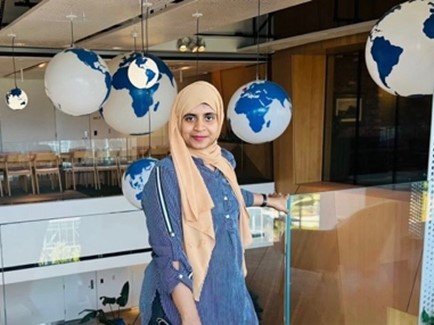
Talk Title: Reliable Software Testing with Language Models and Program Analysis
Speaker: Shanto Rahman, Ph.D. Candidate, University of Texas at Austin
Abstract:
Software testing is one of the most scalable ways to check program correctness. However, nondeterminism in test execution and rapid code evolution can cause tests to break and produce false failures, where the same test may fail without any underlying bug. As these false failures accumulate, developers may start ignoring test results, allowing real bugs to reach production. My research aims to make software testing reliable by detecting, understanding, reproducing, and repairing such broken tests. In this talk, I first present my work on predicting and diagnosing the root causes of flaky tests using context-aware attribution, helping developers understand why nondeterministic failures occur while reducing runtime and memory cost. Next, I introduce automated repair techniques for both nondeterminism- and evolution-induced test breakage using intent-preserving dynamic instrumentation and generative AI. These techniques are evaluated on large-scale, real-world datasets, and achieve high repair success. I conclude by outlining a path from reliable test diagnosis and repair, extending these reliability foundations to modern computing systems for trustworthy, safe operation in practice.
Bio:
Shanto Rahman is a final-year Ph.D. candidate at The University of Texas at Austin, advised by August Shi. Her research sits at the intersection of software engineering, program analysis, and AI, with a focus on making software testing reliable under nondeterminism and continuous code evolution. Her work has been published in top venues including ICSE, OOPSLA, ASE, and ICST. Shanto has gained industry experience through research internships at Google and Amazon Web Services (AWS). She has been recognized as an MIT EECS Rising Star and has received multiple UT Austin fellowships and awards.
Event Details
Media Contact
EVENTS BY SCHOOL & CENTER
School of Computational Science and Engineering
School of Interactive Computing
School of Cybersecurity and Privacy
Algorithms and Randomness Center (ARC)
Center for 21st Century Universities (C21U)
Center for Deliberate Innovation (CDI)
Center for Experimental Research in Computer Systems (CERCS)
Center for Research into Novel Computing Hierarchies (CRNCH)
Constellations Center for Equity in Computing
Institute for People and Technology (IPAT)
Institute for Robotics and Intelligent Machines (IRIM)